JOBST vs Sigvaris vs Comrad vs FALKE — Compression Sock Brands Compared
Fact-checked against cited clinical sources, July 2026. Written and reviewed by the Compression & Shapewear editorial team. Informational only; not medical advice. · Last updated 31 July 2026
Four brands come up again and again when women who actually need compression — cabin crew, nurses, teachers, anyone standing through a twelve-hour day — ask what to buy. They are not interchangeable. One is built for a skirt uniform, one for a prescription, one for surviving the laundry, one for looking like ordinary hosiery.
Here is how JOBST, Sigvaris, Comrad and FALKE differ on the three things that decide whether you keep wearing them: how accurate the stated mmHg is, how visible they are, and how much compression is left after two months of real use.
How We Compared Them
Every product here sits between 15–20 mmHg (Class 1, preventive) and 20–30 mmHg (Class 2, clinical). That range is where the evidence for reducing end-of-day swelling and travel-related leg heaviness is strongest.
We weighted four criteria: stated versus felt ankle pressure, sheerness under a work uniform, retained compression after roughly eight weeks of three-to-five wears per week, and how realistic the care instructions are for someone doing laundry at midnight after a shift.
Side-by-Side Comparison
| Criterion | JOBST | Sigvaris | Comrad | FALKE |
|---|---|---|---|---|
| mmHg accuracy vs. label | Excellent | Excellent | Good | Good |
| Sheerness | Very sheer (15 den) | Sheer, structured | Opaque (cotton) | Semi-opaque (40 den) |
| Compression held after 8 weeks | High | High | Moderate | Moderate |
| Ease of donning | Moderate | Hard (Class 2) | Easy | Easy |
| Washing | Hand wash | Hand wash | Machine (cold) | Machine (cold) |
| Best for | Skirt uniforms | Clinical need | Daily comfort | Everyday opaque hosiery |
| Price tier | Mid–High | High | Mid | Mid–High |
JOBST — The Uniform Standard
JOBST has been making medical compression since long before compression became a lifestyle category, and it shows in the consistency. The ankle pressure is firm and identifiable the moment you put them on, which is a good sign: vague, comfortable-everywhere compression usually means the graduation is off.
The UltraSheer is the one to buy if your uniform involves a skirt. At roughly 15 denier it reads as ordinary hosiery from two feet away. Sizing runs slightly small — measure your ankle and calf in the morning and size up if you are between.
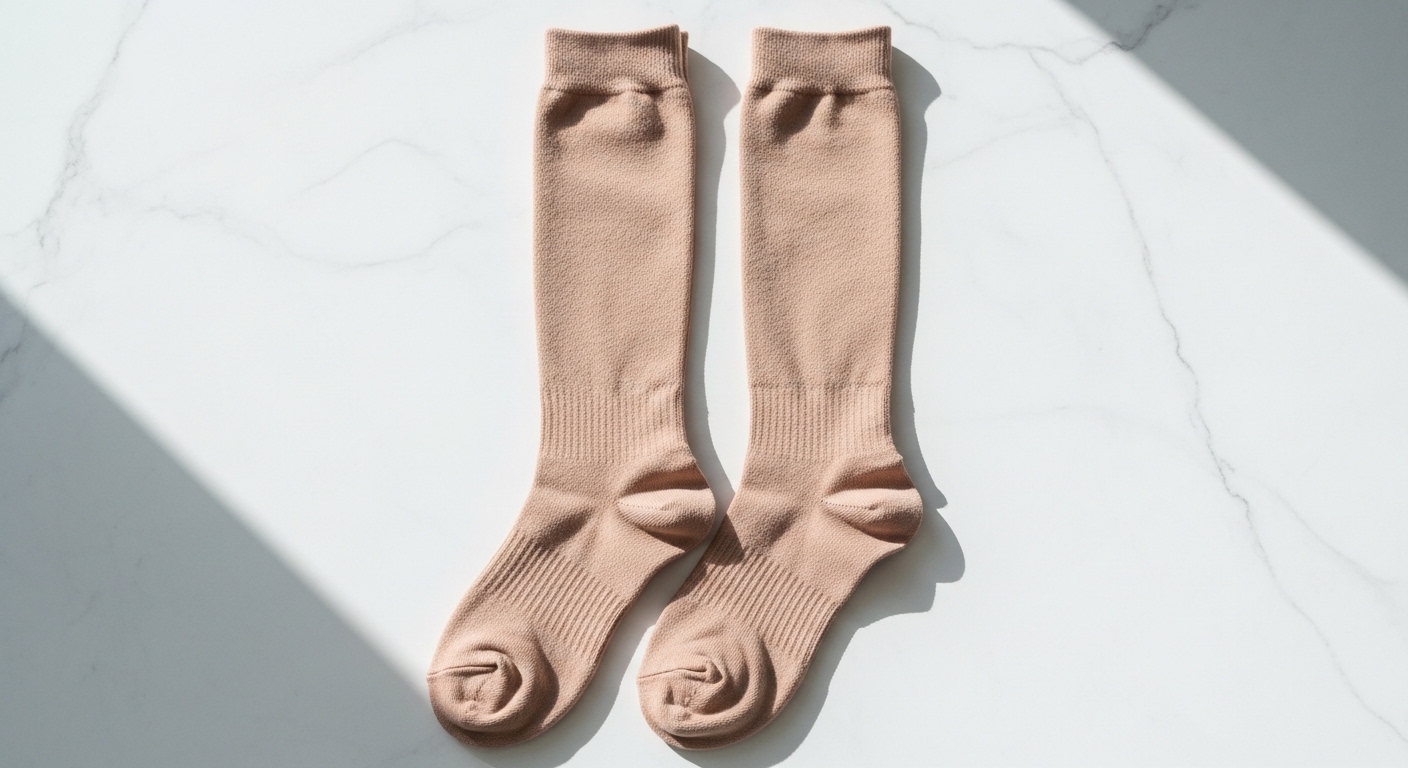
JOBST UltraSheer Knee-High 15-20 mmHg
Sheer 15-denier medical knee-high with firm, accurate graduated ankle compression. The invisible-under-skirt option for uniformed crew.
Best for: Skirt uniforms, long-haul flights, all-day standing
Pros
- ✓ Virtually invisible under uniform
- ✓ Accurate, consistent mmHg
- ✓ Clinical brand heritage
- ✓ Holds compression well past 8 weeks
Cons
- ✗ Hand wash recommended
- ✗ Runs small — size up if between sizes
When swelling reaches above the knee — common in later pregnancy, after long-haul rotations, or with venous insufficiency — the knee-high stops being enough. The Relief waist-high pantyhose extends the same graduation over the full leg without the seam pressure of thigh-highs.
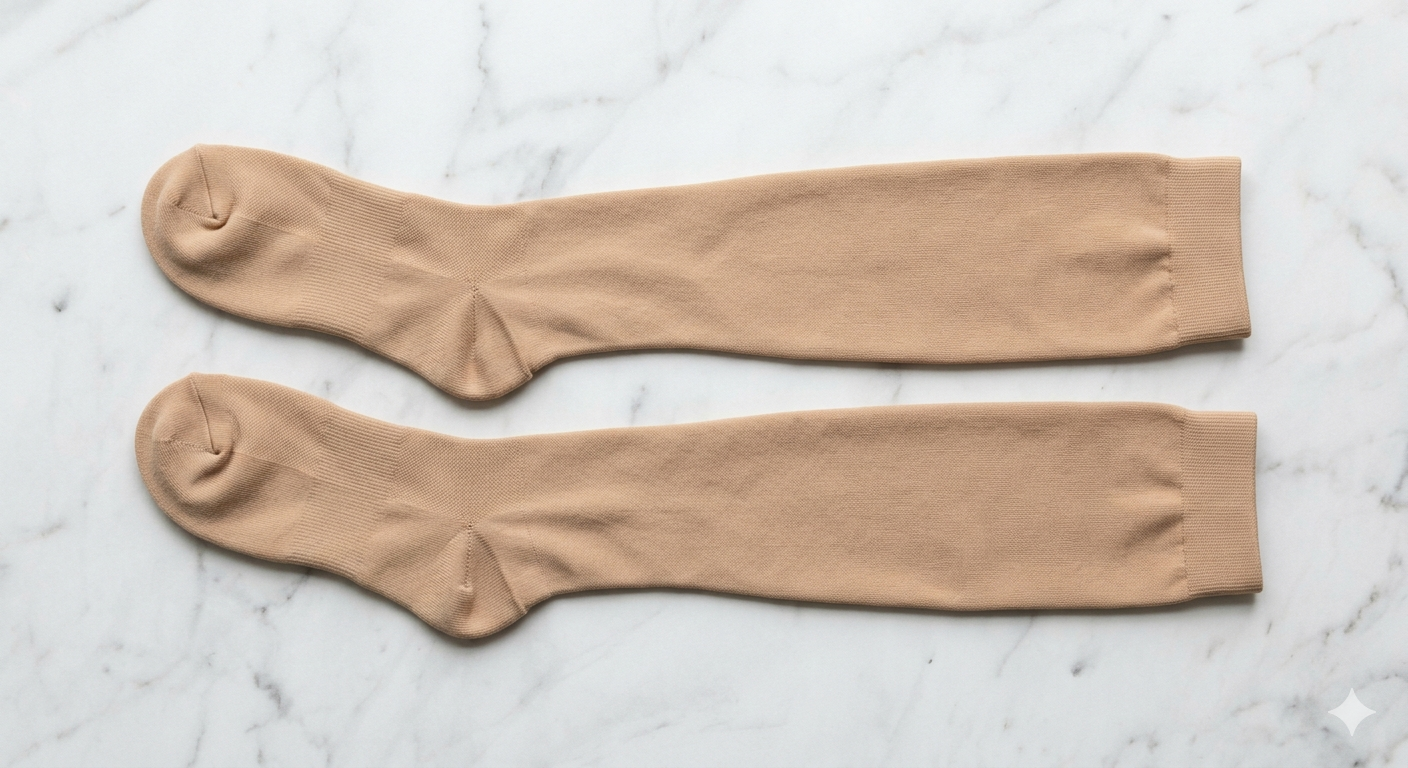
JOBST Relief Waist High Pantyhose 15-20 mmHg
Full-leg graduated compression pantyhose for swelling that extends above the knee. Opaque, durable knit built for daily clinical wear.
Best for: Above-knee swelling, pregnancy, full-leg coverage
Pros
- ✓ Full-leg graduated compression
- ✓ No thigh-band pressure point
- ✓ Durable everyday knit
Cons
- ✗ Less sheer than UltraSheer
- ✗ Takes longer to put on
Sigvaris — When It's Clinical
Sigvaris is the most medically oriented of the four. If a clinician has told you that you need Class 2 compression, this is the brand that delivers it accurately and keeps delivering it after months of wear.
The trade-off is donning. 20–30 mmHg is genuinely hard to get on, especially in the morning. A donning aid is not a luxury at this level. If 15–20 mmHg is doing the job for you, there is no reason to move up.
Sigvaris Style Sheer 780 Knee-High 20-30 mmHg
Class 2 sheer knee-high for moderate edema, CVI and varicose vein management — a rare combination of medical-grade pressure and uniform-compatible sheerness.
Best for: Clinically indicated Class 2 compression
Pros
- ✓ Certified 20–30 mmHg (medical standard)
- ✓ Sheer despite the higher class
- ✓ Excellent compression retention
Cons
- ✗ Hard to don without an aid
- ✗ Hand wash only
- ✗ Premium price
If you would rather wear leggings than socks, Sigvaris makes a 15–20 mmHg legging that behaves like real compression rather than tight athleisure — useful for commuting, travel days and off-shift recovery.
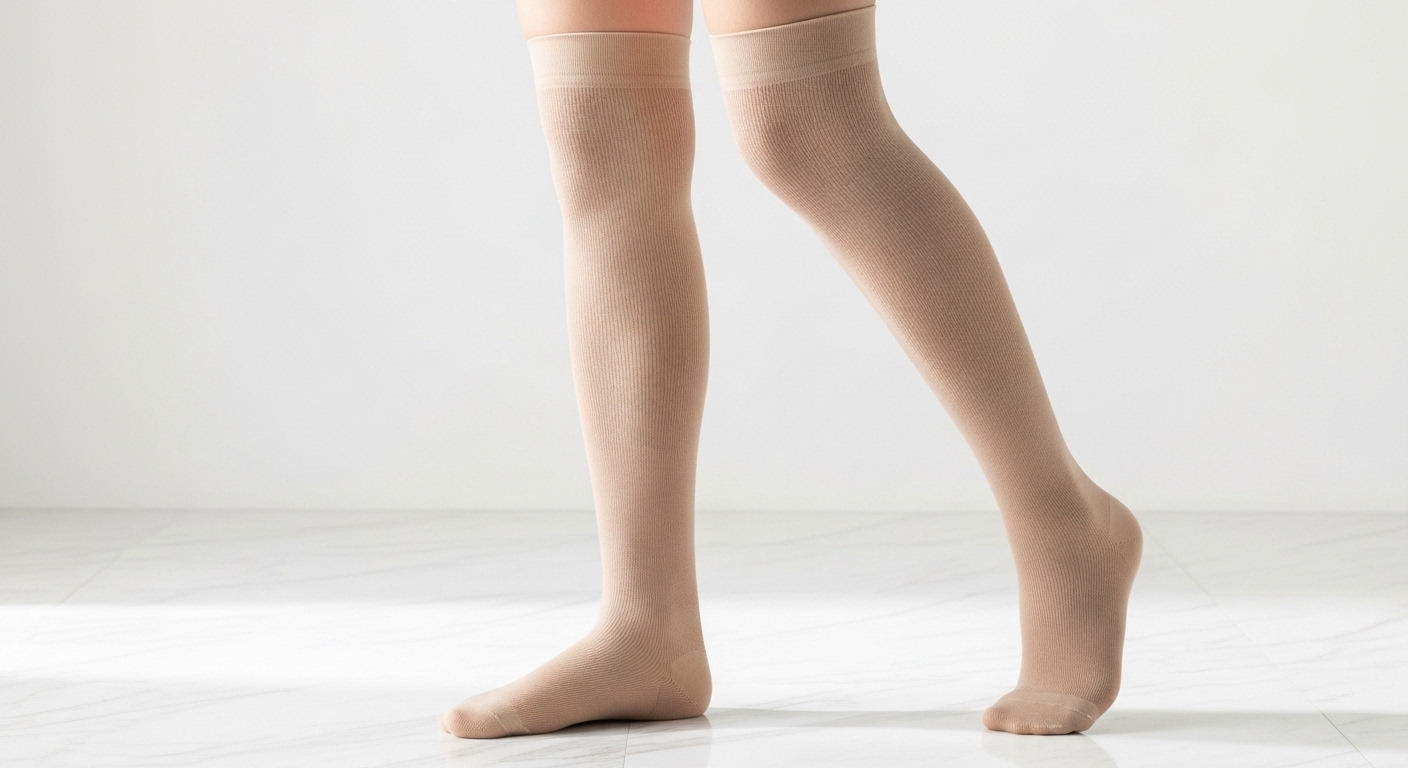
SIGVARIS Soft Silhouette Leggings 15-20 mmHg
Graduated 15–20 mmHg compression leggings with a soft matte finish. Real medical graduation in a garment you can wear off-shift.
Best for: Travel days, commuting, recovery between shifts
Pros
- ✓ True graduated compression, not just tight fabric
- ✓ Comfortable matte finish
- ✓ Wearable outside work
Cons
- ✗ Warmer than sheer hosiery
- ✗ Higher price than fashion leggings
For anyone whose feet overheat in nylon — a real problem in closed shoes across a long shift — the Essential Cotton calf-high is the sensible Class 2 alternative.
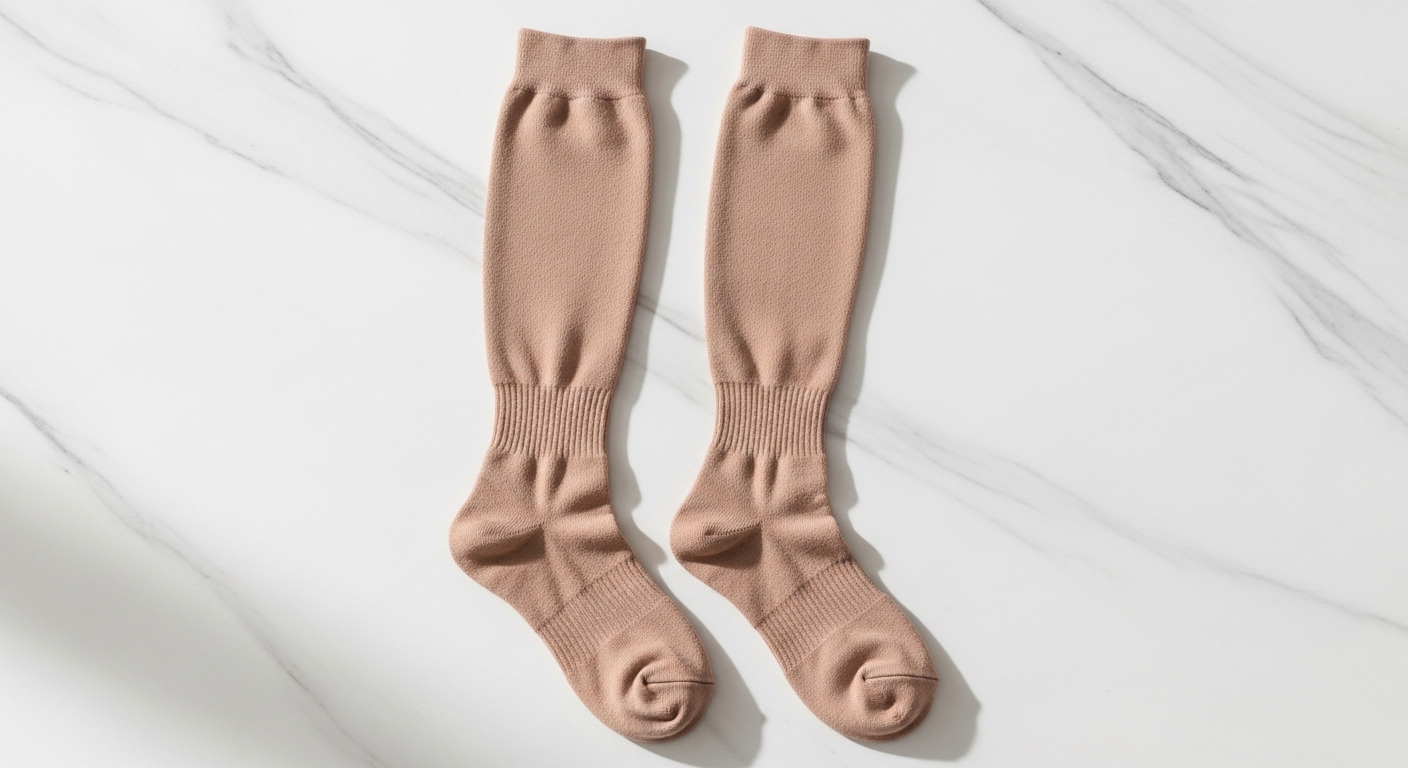
SIGVARIS Essential Cotton Calf-High 20-30 mmHg
Cotton-blend Class 2 calf-high built for breathability in closed shoes, with the same graduation standard as the sheer Sigvaris range.
Best for: Hot environments, closed work shoes, nylon sensitivity
Pros
- ✓ Breathable cotton blend
- ✓ Class 2 accuracy
- ✓ Comfortable against sensitive skin
Cons
- ✗ Opaque — not uniform-invisible
- ✗ Still hard to don
Comrad — The Durable Everyday Pick
Comrad made compression feel like clothing rather than equipment, and the premium cotton knee-high is still the reason to buy the brand. It is opaque, so it is not the choice for a skirt uniform, but under trousers it is invisible enough, it breathes well on long days, and it survives the washing machine.
Compression retention is a step below JOBST and Sigvaris, but the practical difference matters less if you rotate two or three pairs and replace them every four months.
Comrad Premium Cotton Knee High Socks 15-20 mmHg
Soft cotton-blend knee-high with graduated 15–20 mmHg compression, breathable on long days and built to hold ankle pressure through repeated machine washing.
Best for: Everyday wear under trousers, low-maintenance care
Pros
- ✓ Machine washable
- ✓ Soft, breathable cotton blend
- ✓ Neutral workwear colours
- ✓ Easy to put on
Cons
- ✗ Opaque — visible under skirts
- ✗ Softens sooner than medical brands
FALKE — Hosiery First, Compression Second
FALKE approaches the category from hosiery rather than medicine, and the Leg Vitalizer is the result: 40 denier, semi-opaque and genuinely elegant, with light graduated support that takes the ache out of a long day without announcing itself.
Do not buy it expecting clinical-grade pressure. Buy it because you will actually wear it — which, for a lot of people, is the difference between compression that helps and compression that stays in a drawer.
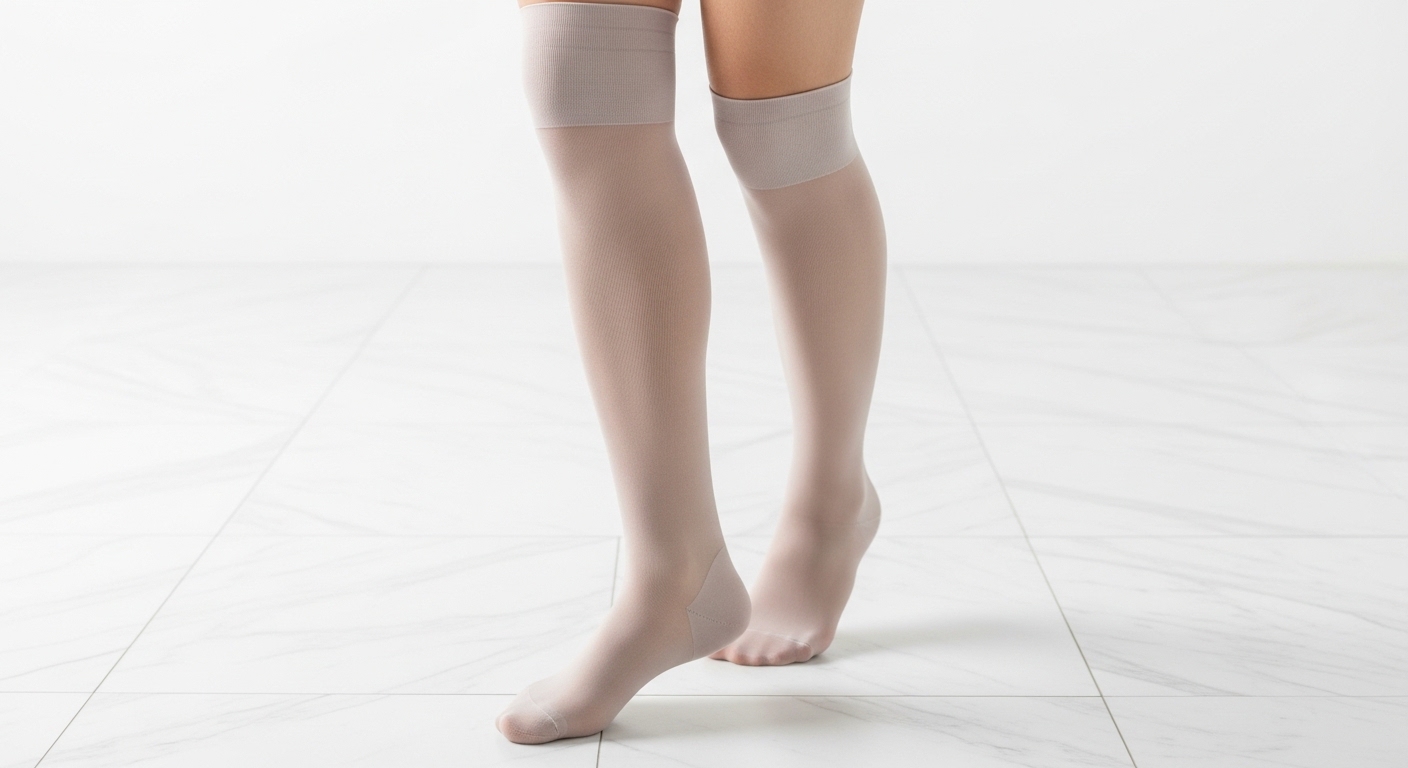
FALKE Leg Vitalizer 40 Den Compression Tights
40-denier semi-opaque graduated support tights from a hosiery house — light compression in a garment that looks like ordinary opaque winter hosiery.
Best for: Office wear, formal uniforms, light preventive support
Pros
- ✓ Looks like ordinary semi-opaque hosiery
- ✓ Comfortable all day
- ✓ Machine washable on cold
Cons
- ✗ Lighter support than medical brands
- ✗ Too warm for hot weather at 40 den
Frequently Asked Questions
Which brand holds its stated mmHg the longest?
Sigvaris and JOBST both hold their graduated pressure noticeably longer than fashion-led brands, because they are manufactured to medical compression standards and batch-tested by the manufacturer. In practical terms, expect four to six months of real compression from either at three to five wears per week. Comrad and FALKE soften sooner, typically around the three-to-four-month mark with the same use.
Is 15–20 mmHg enough if I'm on my feet twelve hours?
For most healthy people, yes. 15–20 mmHg (Class 1) is the range recommended for preventing end-of-shift swelling and travel-related leg heaviness. Move up to 20–30 mmHg only when a clinician recommends it for a specific issue such as moderate edema, varicose veins or chronic venous insufficiency.
Which one is genuinely invisible under a uniform?
JOBST UltraSheer is the one you can wear under a skirt without anyone noticing. FALKE Leg Vitalizer is semi-opaque at 40 denier — it reads as ordinary winter hosiery rather than bare legs. Comrad is opaque cotton and better suited to trousers.
Can I wash them normally?
Comrad and FALKE tolerate a cold gentle machine cycle. JOBST and Sigvaris both prefer hand washing to protect the graduated knit. Nothing on this list should go in a hot dryer — heat is what kills the elastane and, with it, the compression.
Knee-high, thigh-high or waist-high?
Knee-high covers the calf pump, which is where most of the swelling benefit comes from, and it is the easiest to wear daily. Go waist-high or thigh-high when swelling extends above the knee, or when a clinician has advised full-leg coverage.
Which One Should You Buy
Skirt uniform, first pair, want it invisible: JOBST UltraSheer.
A clinician told you Class 2: Sigvaris Style Sheer 780.
Trousers, machine wash, no fuss: Comrad Premium Cotton Knee High.
You want something you will genuinely enjoy wearing: FALKE Leg Vitalizer.
If you are still unsure which pressure class applies to you, start with How to Choose the Right Compression Level.
Nurses working twelve-hour floors should read our medical-grade guide for nurses, and cabin crew can compare knee-highs against leggings in the flight attendant compression guide.