Best Compression Socks for Nurses: Survival Guide for 12-Hour Shifts
Fact-checked against cited clinical sources, April 2026. Written and reviewed by the Compression & Shapewear editorial team. Informational only; not medical advice.
Nursing is one of the few professions where "sitting down" is considered a luxury. Whether you're working in the ER, a busy med-surg floor, or a specialized clinic, your legs are your primary engine. By the time you reach hour ten of a twelve-hour shift, that engine often starts to fail.
It's not just muscle fatigue. It's a physiological battle against gravity. When you stand or walk on hard hospital floors for miles every day, your circulatory system struggles to pump blood from your ankles back to your heart. This is where medical-grade compression isn't just an accessory—it's essential PPE for your vascular health.
The Hemodynamics of the "Nursing Shift"
When you stand for prolonged periods, blood tends to pool in the lower extremities. This "venous pooling" increases hydrostatic pressure on the vein walls. Over time, this leads to the classic symptoms every nurse knows: throbbing calves, swollen ankles (edema), and eventually, the development of spider or varicose veins.
According to research cited in the National Center for Biotechnology Information (Source: PMC4081237), graduated compression works by applying the highest pressure at the ankle and gradually decreasing it up the leg. This mechanical assistance narrows the diameter of the veins, increasing the velocity of blood flow and preventing the valves from leaking. For a nurse, this means oxygenated blood circulates faster, reducing that "heavy" feeling that usually hits mid-shift.
Why Hard Hospital Floors Are Your Enemy
Unlike carpeted offices or even outdoor surfaces, hospital floors offer zero shock absorption. Every step you take sends a micro-vibration up your legs, contributing to vascular fatigue. Medical-grade compression socks act as a structural support for your veins, maintaining their shape even when your calf muscles are exhausted and can't perform their "muscle pump" function effectively.
Choosing Your mmHg Level: 15-20 vs 20-30
Not all "support socks" are created equal. For healthcare workers, the choice usually boils down to two medical classes:
15–20 mmHg (Class 1) — The "Daily Driver"
This is the ideal entry point. If you don't have visible varicose veins but want to prevent that "heavy leg" feeling at the end of the day, 15-20 mmHg provides enough support to keep your circulation moving without feeling restrictive.
And let's be practical: they are much easier to put on during a 5 AM pre-shift rush when every minute counts.
20–30 mmHg (Class 2) — The Medical Standard
If you already notice swelling around your sock line or have a family history of venous insufficiency, 20-30 mmHg is the clinical recommendation (Source: Norton School of Lymphatic Therapy).
But be aware: this level of pressure is firm. It requires a bit more effort to apply but offers significant relief during high-intensity shifts where you rarely have a moment to sit down.
| Feature | 15–20 mmHg (Class 1) | 20–30 mmHg (Class 2) |
|---|---|---|
| Pressure Level | Moderate | Firm |
| Ideal For | Prevention & mild fatigue | Active swelling & varicose veins |
| Ease of Application | Easy — slides on quickly | Moderate — may need donning aids |
| Comfort (12-hr shift) | Very comfortable | Snug but effective |
| Requires Prescription? | No | No (recommended by doctors) |
Our Top Recommendations for 2026
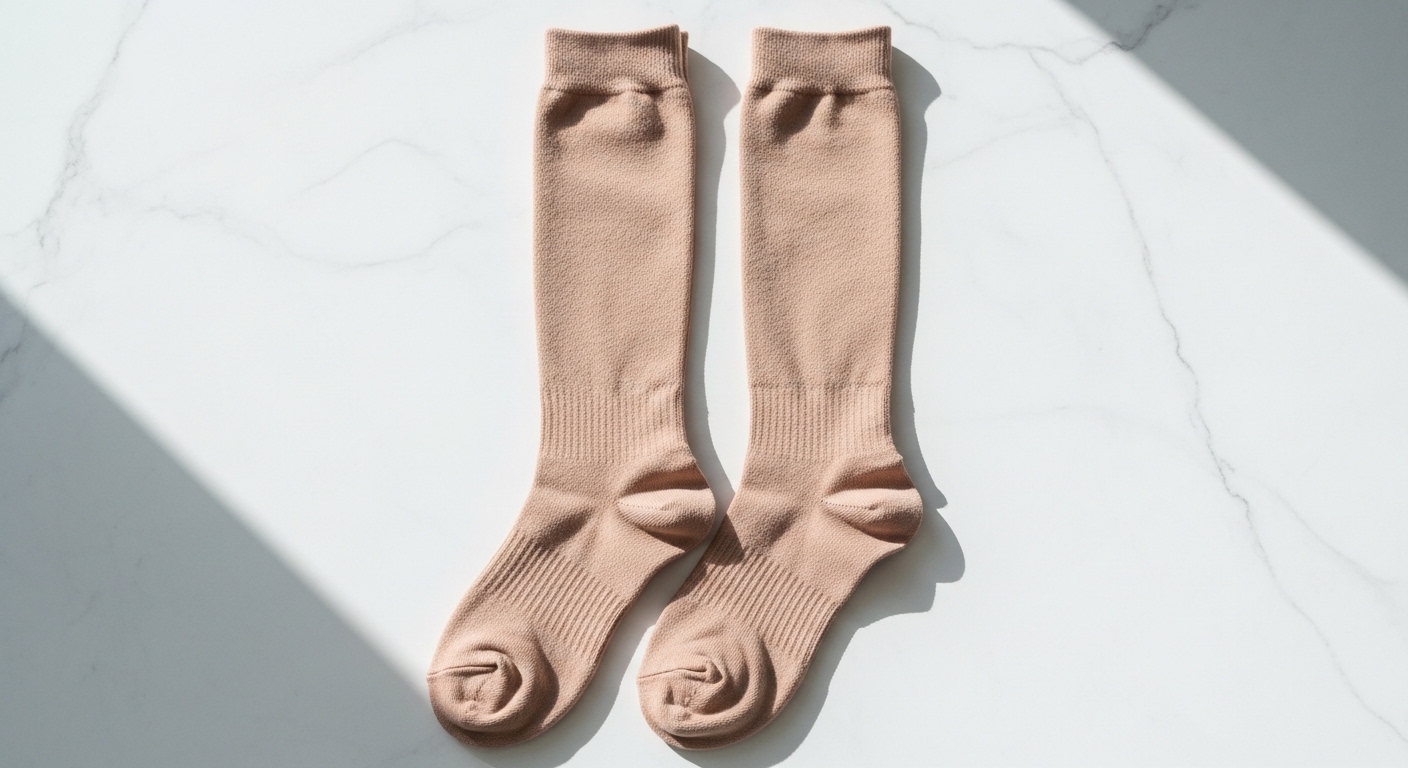
JOBST UltraSheer Knee-High (15-20 mmHg)
Jobst is a name you'll see in every hospital supply room. The UltraSheer line offers a professional, breathable look that doesn't scream 'medical hosiery.' They feature a comfort band that stays up all day without digging in—a common complaint with cheaper brands.
Best for: Nurses wanting a professional look with reliable compression
Pros
- ✓ Medical-grade 15-20 mmHg
- ✓ Comfort band stays in place
- ✓ Breathable, professional appearance
Cons
- ✗ Limited color options
- ✗ Delicate fabric requires careful washing
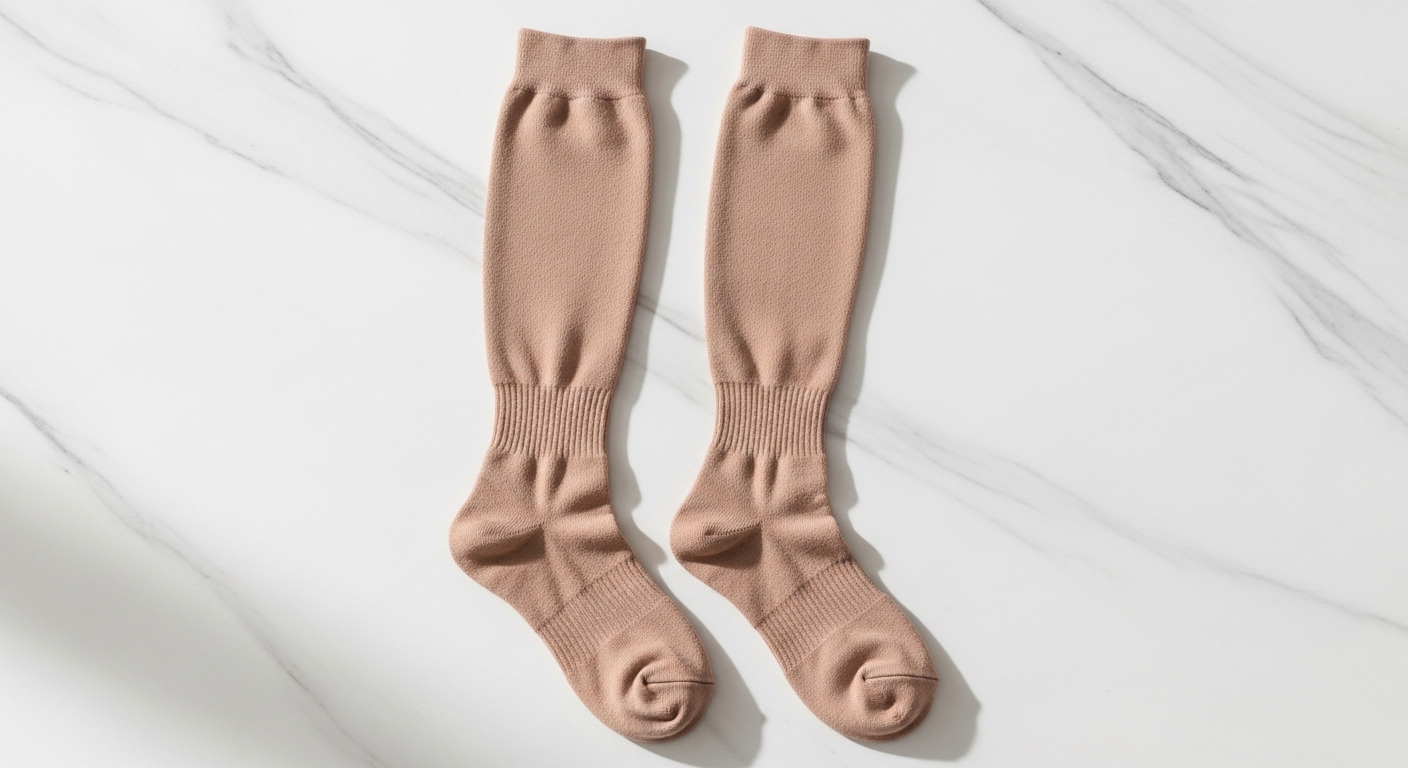
SIGVARIS Essential Cotton (20-30 mmHg)
For nurses with sensitive skin or those working in warmer environments, synthetic fibers can feel itchy by hour eight. Sigvaris uses high-quality Supima cotton. These provide a firm, medical-grade squeeze but feel like a soft athletic sock. They handle industrial-grade laundering exceptionally well.
Best for: Nurses with sensitive skin or warm work environments
Pros
- ✓ Supima cotton comfort
- ✓ Medical-grade 20-30 mmHg
- ✓ Extremely durable
Cons
- ✗ Higher price point
- ✗ Thicker than sheer alternatives
Comrad Premium Cotton Knee-High (15-20 mmHg)
If you want style without sacrificing science, Comrad is the answer. Their cotton blend is soft and breathable, which matters across a 12-hour shift in warm ward conditions. The graduated 15-20 mmHg sits squarely in Class 1, making them a versatile choice for most nursing roles.
Best for: Nurses who want style and function in one package
Pros
- ✓ Stylish designs available
- ✓ Soft, breathable cotton blend
- ✓ Everyday 15-20 mmHg Class 1 range
Cons
- ✗ Not true medical-grade
- ✗ May run small
Common Mistakes Nurses Make with Compression
Even the best socks won't work if they aren't used correctly. Watch out for these three pitfalls:
- Don't Wait for Symptoms: Prevention is much easier than treatment. Don't wait for your first spider vein to appear before starting your compression routine.
- Improper Sizing: A sock that's too tight at the top can act as a tourniquet. Always measure your calf at its widest point; don't just rely on shoe size.
- Worn-out Elastic: Compression socks aren't forever. The elastic fibers degrade over 4–6 months of heavy use. If they feel easy to put on, they probably aren't compressing enough anymore.
The Post-Shift Recovery Ritual
While socks are your first line of defense, how you end your day matters too. When you get home, try to elevate your legs above your heart level for at least 15 minutes. This uses gravity to assist the work your socks were doing all day.
For more tips on how to manage your body after a grueling day, check our recovery rituals for long shifts or learn how to care for your compression wear to make your investment last longer.
Frequently Asked Questions
How long can I safely wear compression socks during a shift?
You can wear them for the entire duration of your shift. However, you should remove them before sleeping to allow your skin to breathe and because gravity no longer presents the same challenge to your circulation when you are lying flat.
Should nurses wear 15-20 mmHg or 20-30 mmHg?
For general prevention and comfort, 15-20 mmHg is usually sufficient. If you already experience swelling (edema) or have early signs of varicose veins, 20-30 mmHg provides the medical-grade support necessary to prevent further progression.
Do compression socks prevent varicose veins in nurses?
Yes. By preventing blood from pooling in the lower legs and reducing pressure on vein walls, graduated compression significantly lowers the risk of developing varicose and spider veins caused by prolonged standing.
How often should I wash my compression socks?
Ideally after every wear. Washing removes the oils and sweat that can break down elastic fibers, and it helps the fabric 'snap back' to its original compression level.
Summary
Don't let your career dictate the health of your legs. Start with a reliable 15-20 mmHg pair and listen to your body. Your future self—and your feet—will thank you.