Best Compression Leggings for Flight Attendants 2026
Ask any flight attendant what their biggest physical complaint is and the answer is almost always the same: swollen, heavy legs. After a 14-hour long-haul flight, your ankles can swell by up to 10% in volume — a combination of altitude, cabin pressure, and prolonged standing.
The right compression leggings change this. We've researched the best options specifically for cabin crew — prioritising swelling prevention, invisibility under uniforms, and durability through hundreds of flights.
Why Compression Leggings Matter for Cabin Crew
Three physiological factors make flight attendants particularly vulnerable to leg swelling:
Reduced cabin pressure at altitude lowers the atmospheric pressure pushing against your legs, allowing fluid to pool more easily in your ankles and feet.
Prolonged standing and restricted movement slows the calf muscle pump — your body's primary mechanism for returning blood and lymph fluid upward.
Repeated exposure means flight attendants experience these conditions not once but hundreds of times per year, making chronic leg swelling and varicose veins a genuine occupational health risk.
Graduated compression leggings — firmest at the ankle, decreasing toward the thigh — counteract all three factors by providing the external pressure your body loses at altitude.
What Makes a Great Compression Legging for Flight Attendants
Four criteria matter above everything else:
Invisible under uniform: Smooth, seamless construction with no visible lines under uniform trousers or skirts.
Certified compression level: A clear mmHg rating — 15–20 mmHg for most flight attendants. Avoid vague claims with no measurable rating.
All-day comfort: A waistband that doesn't roll, fabric that doesn't pill, compression that remains comfortable through a 12-hour shift.
Durability: Flight attendants wear compression leggings constantly. Cheap options lose elasticity quickly — invest in quality that lasts a full season.
Our Top Picks for Flight Attendants 2026
VIM & VIGR Nylon Footless Compression Tights (15–20 mmHg) — Best Full-Leg Option
Class 1 graduated compression in a footless nylon tight, covering ankle to waist. The footless cut lets you wear your own socks or knee-highs and keeps shoe fit unchanged.
Best for: All airlines, long-haul flights, daily wear
Pros
- ✓ 15–20 mmHg graduated compression
- ✓ Full-leg coverage from ankle to waist
- ✓ Footless: pairs with your own socks or hosiery
Cons
- ✗ Footless edge shows at the ankle with open shoes or skirts unless layered
- ✗ Size by ankle and calf measurement, not dress size
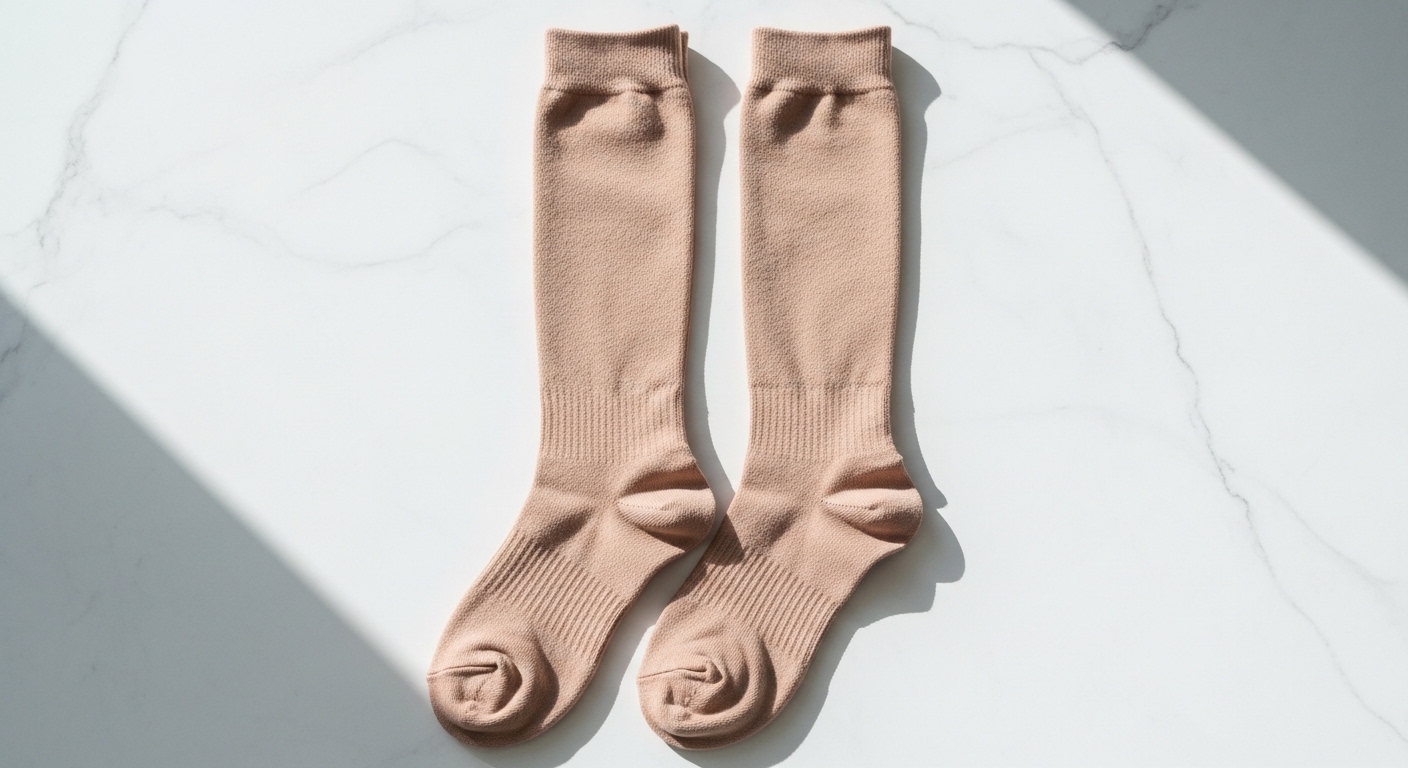
Comrad Compression Socks — Best for Recovery
For targeted ankle and calf compression, Comrad delivers medical-grade support in a professional design. Perfect for recovery days and positioning flights.
Best for: Recovery between flights, positioning sectors, pairing with leggings
Pros
- ✓ 15-20 mmHg certified compression
- ✓ Professional appearance
- ✓ Exceptional durability
- ✓ Pairs well with any legging
Cons
- ✗ Ankle and calf only
- ✗ Not full-leg compression
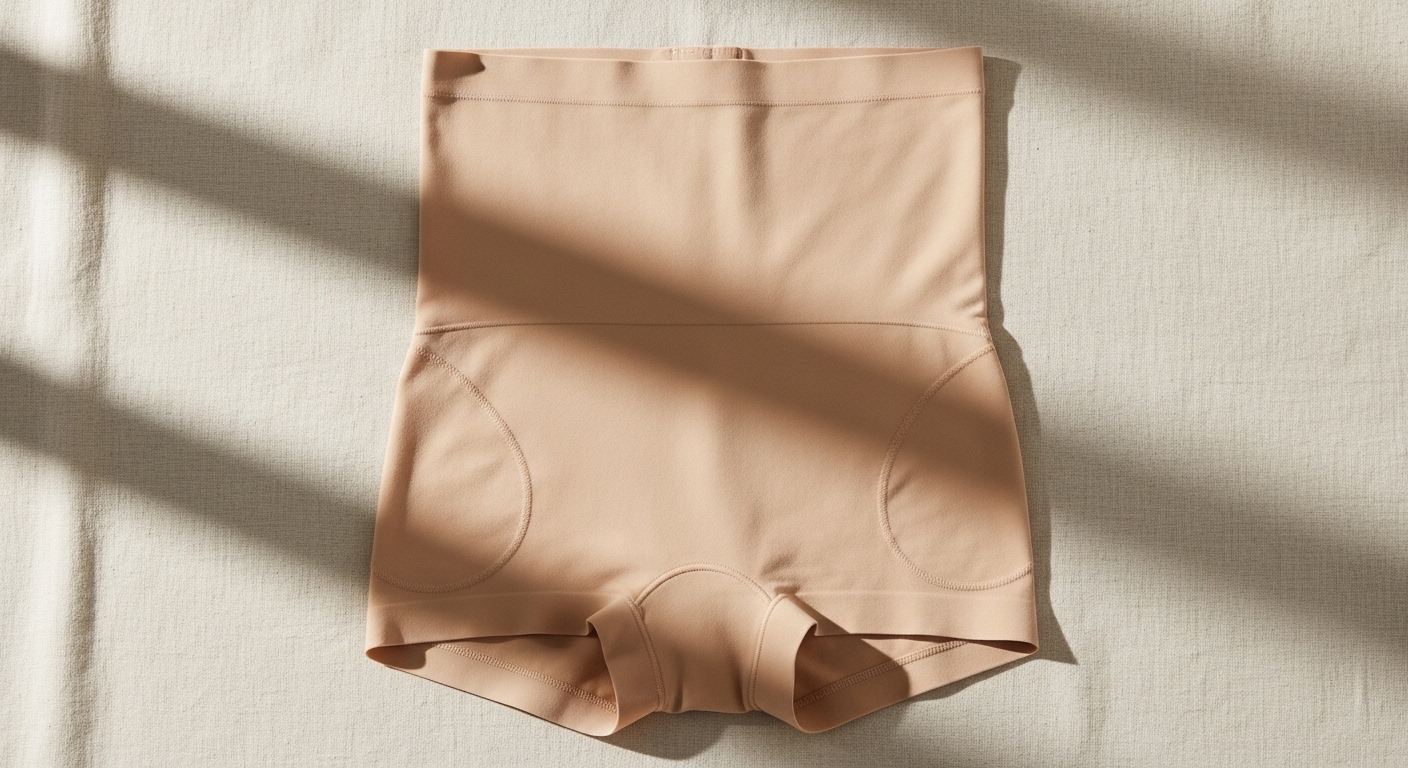
Honeylove EverReady Legging — Best for Support
Targeted multi-zone compression with structured boning. For flight attendants who want shapewear and compression support in one garment.
Best for: Flight attendants wanting shapewear plus compression
Pros
- ✓ Multi-zone targeted compression
- ✓ Doesn't roll at waist
- ✓ Smooth under fitted uniforms
- ✓ Structured all-day support
Cons
- ✗ Shapewear compression — not medical-grade mmHg
- ✗ Premium price
Stay informed
Research-based reviews, comparisons, and buying guides — delivered to your inbox.
Compression Levels Explained for Flight Attendants
| Compression Level | mmHg Range | Best For | Feel |
|---|---|---|---|
| Mild | 8–15 mmHg | General fatigue, light travel | Barely noticeable |
| Moderate | 15–20 mmHg | Most flight attendants — daily wear | Gentle squeeze |
| Firm | 20–30 mmHg | Heavy swelling, varicose veins | Noticeable pressure |
| Extra firm | 30–40 mmHg | Medical — lymphedema, post-op | Requires fitting guidance |
For most flight attendants, 15–20 mmHg is the optimal level — strong enough to prevent swelling on long-haul flights, comfortable enough to wear through a full 12-hour shift.
How to Get Maximum Benefit
Put compression on before leaving home — before your legs have a chance to swell. Compression prevents swelling; it doesn't cure it.
Stay hydrated throughout your shift — aim for 250ml of water per hour of flying.
Move regularly in the galley — even small calf raises activate the muscle pump that drives lymph fluid upward.
Remove before sleeping — compression during sleep is generally unnecessary and can restrict circulation.
Frequently Asked Questions
What compression level is best for long-haul flights?
15–20 mmHg is the sweet spot for most flight attendants — effective enough to prevent swelling on a 14-hour flight, comfortable enough for a full shift. 20–30 mmHg provides stronger support but can feel restrictive over very long periods.
Will compression tights be visible under my uniform?
Nude or sheer 15–20 mmHg tights and knee-highs are hard to spot under uniform trousers and most skirts. Check your airline's hosiery rules on colour and denier first; footless styles work best under trousers.
How many pairs do I need?
Most flight attendants recommend 3–4 pairs in rotation. This extends the life of each pair and ensures you always have a fresh pair ready for your next sector.
Can I wear compression leggings on positioning flights?
Absolutely — positioning flights are the perfect opportunity. You're sitting for extended periods with no opportunity to move, making compression particularly valuable.
Do compression leggings help with varicose veins?
Graduated compression at 15–20 mmHg is clinically shown to reduce the progression of varicose veins and relieve associated aching and swelling. For diagnosed varicose veins, consult your doctor about whether 20–30 mmHg is more appropriate.
Want to understand the difference between compression and lymphatic leggings?
Read Our Full Comparison