Medical-Grade vs. Regular Compression Leggings: What's the Difference?
Fact-checked against cited clinical sources, August 2026. Written and reviewed by the Compression & Shapewear editorial team. Informational only; not medical advice. · Last updated 31 August 2026
Two pairs of leggings can both say "compression" on the label and have almost nothing in common. One was engineered to hold a specific pressure at your ankle for months; the other is stretchy fabric that feels snug. The difference isn't marketing fluff — it decides whether the garment does anything clinically useful.
Here's what actually separates the two categories, in plain terms: the pressure number, the way the fabric is knitted, how the garment is sized, and whether anyone verified the claim.
The Number on the Label
Medical compression is measured in millimetres of mercury (mmHg) and sorted into classes: under 15 mmHg is light support, 15–20 mmHg is mild-to-moderate (Class 1), 20–30 mmHg is firm (Class 2), and 30 mmHg and above is extra-firm (Class 3). Those ranges are standardised, and the pressure is graduated — highest at the ankle, decreasing up the leg, so blood is nudged back toward the heart (Source: PMC4081237).
Regular compression leggings almost never state a number. "Firm compression," "sculpting," and "high-support" are descriptive words, not measurements. If a listing avoids mmHg entirely, that is your answer: nobody measured it, and nobody is claiming a specific pressure at the ankle.
If you are unsure which class you actually need before comparing garments, start with our guide to choosing the right compression level (mmHg). Buying a stronger garment than you need is one of the more common — and most uncomfortable — mistakes.
What Flat-Knit and Circular-Knit Actually Look Like
Circular-knit garments are made on a cylindrical machine as a continuous tube — no seam, thinner fabric, a smoother and more cosmetic finish. Almost all sheer compression hosiery and most off-the-shelf medical leggings are circular-knit. They work well on legs with a fairly normal shape.
Flat-knit garments are knitted as a flat panel and then sewn together, which leaves a visible seam. The fabric is thicker and stiffer, stitch count can be varied row by row, and the garment therefore holds its shape on limbs that are irregular in shape — the standard approach for lipoedema and lymphoedema. It looks less elegant and it works better where shape is the problem.
Regular activewear uses standard circular-knit stretch fabric with no engineered pressure gradient at all. The tightness comes from the elastane content and the cut, and it drops off as the fabric relaxes over the day.
For how individual brands sit on this spectrum, see our compression brands compared breakdown.
A circular-knit example
This is what precision circular-knit medical compression looks like: a stated 20–30 mmHg, a sheer finish, and sizing based on leg measurements rather than dress size.
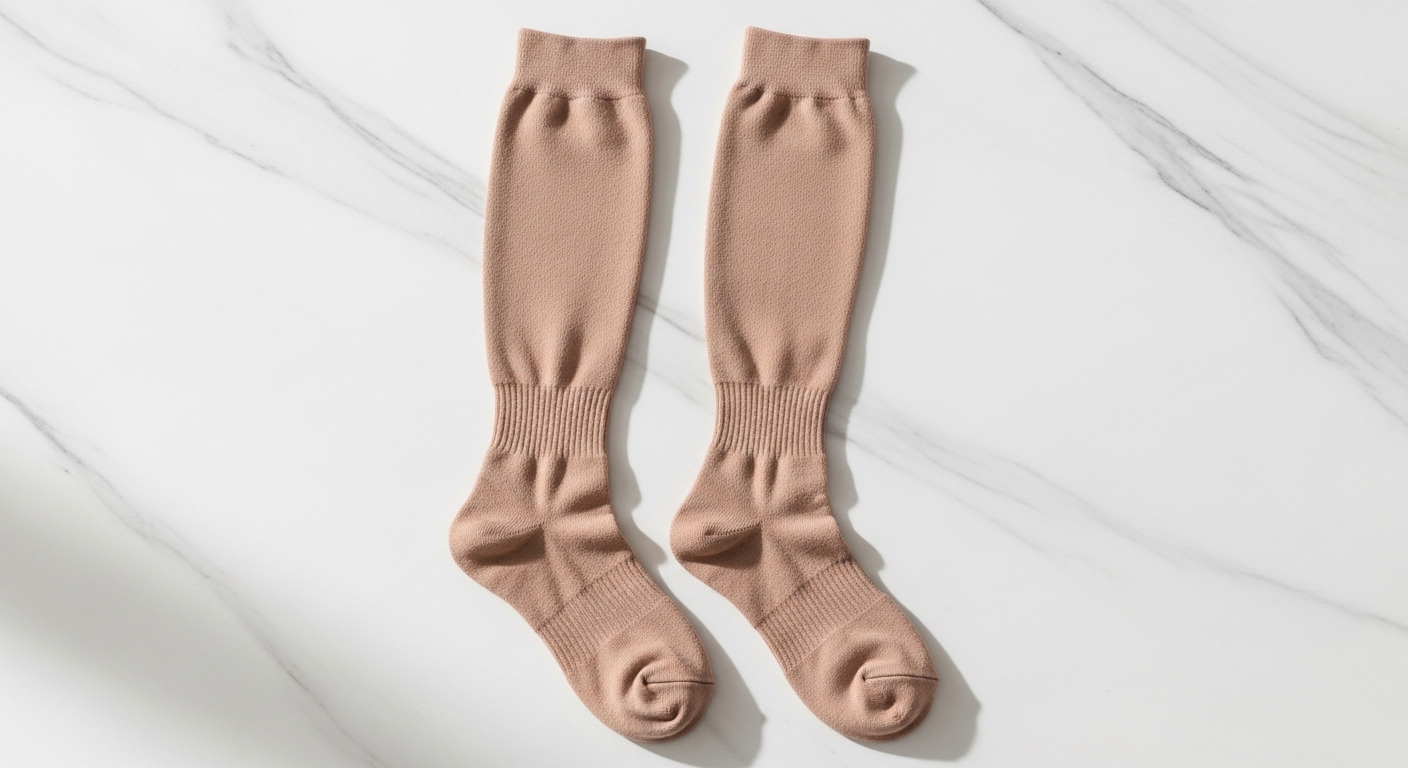
Sigvaris Style Sheer 780 Knee-High 20-30 mmHg
Precision circular-knit medical compression with a genuine stated 20–30 mmHg gradient and a sheer, non-clinical finish.
Best for: Circular-knit medical compression that doesn't look medical
Pros
- ✓ Stated, verified 20–30 mmHg gradient
- ✓ Sheer enough for professional wear
- ✓ Sized by leg measurement, not dress size
- ✓ Established medical brand
Cons
- ✗ Sheer knit is more delicate than flat-knit
- ✗ Premium price for a single pair
A flat-knit example
Flat-knit leggings are the category most people have never seen in a shop. They are thicker, visibly seamed, and designed for limbs where a tube-shaped garment would slide, roll, or cut in.
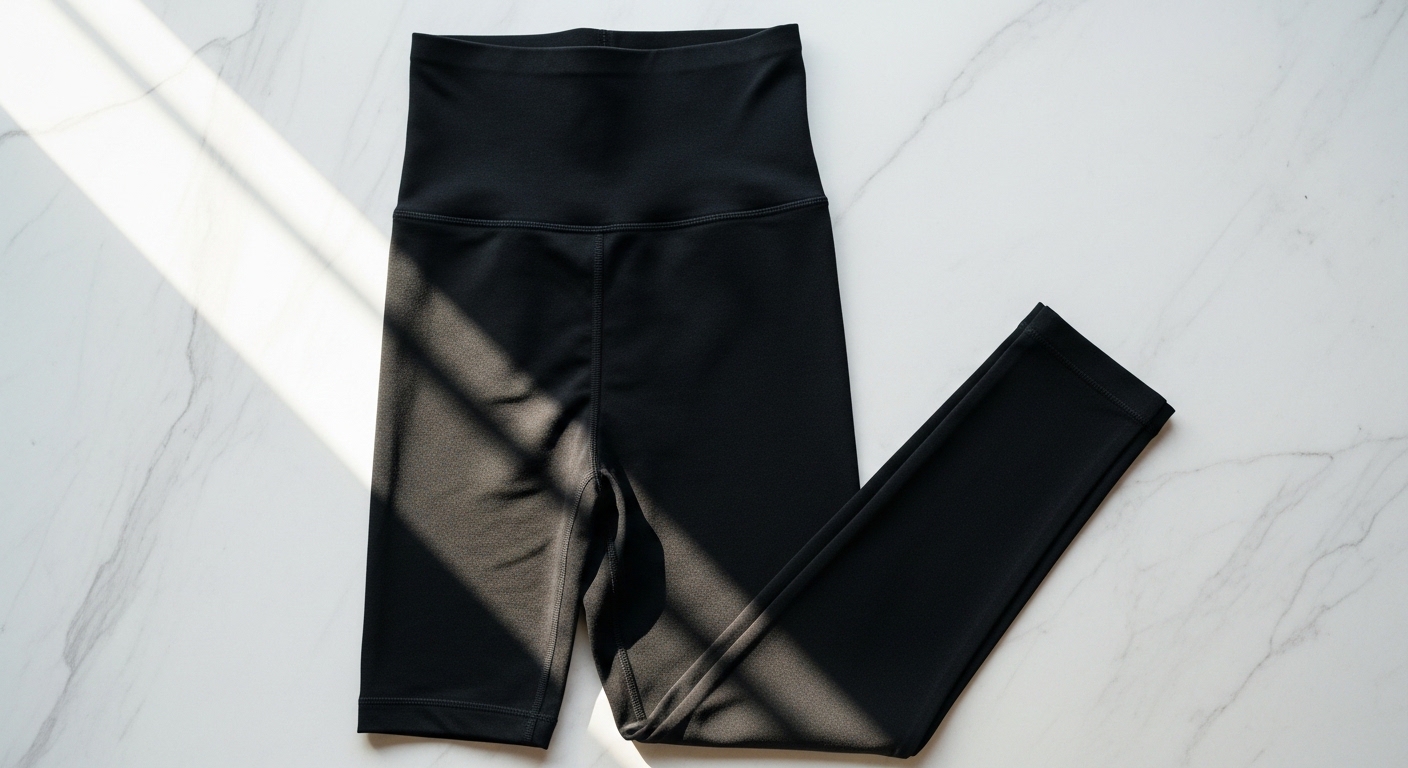
CzSalus Flat Knit Lipedema Leggings 18-21 mmHg
Thicker flat-knit construction with a stated 18–21 mmHg range, built for irregularly shaped limbs rather than a standard leg profile.
Best for: Lipoedema and shape-related swelling
Pros
- ✓ True flat-knit construction with a visible seam
- ✓ Holds shape on irregular limbs
- ✓ Stated 18–21 mmHg range
- ✓ Resists rolling and cutting in at the thigh
Cons
- ✗ Thicker and warmer than circular-knit
- ✗ Not a discreet garment under thin clothing
Sizing Is the Part People Get Wrong
Regular leggings are sold in S/M/L. Medical garments are sized from circumference measurements at the ankle, calf, and thigh, ideally taken in the morning before swelling builds. That is why two people who wear the same dress size can need different compression sizes, and why a garment ordered by dress size often delivers the wrong pressure in the wrong place.
A garment that is too large applies less pressure than its label claims. A garment that is too small can constrict rather than compress — a tourniquet effect at the top band is a real and avoidable problem.
Where Prescription Fitting Comes In
For most people, 15–20 mmHg and even 20–30 mmHg garments are available over the counter. Prescription territory begins where the condition, not the shop, decides: post-thrombotic syndrome, advanced venous insufficiency, lymphoedema management, and anything requiring a custom-made garment. There, a trained fitter measures the limb and the class is chosen clinically.
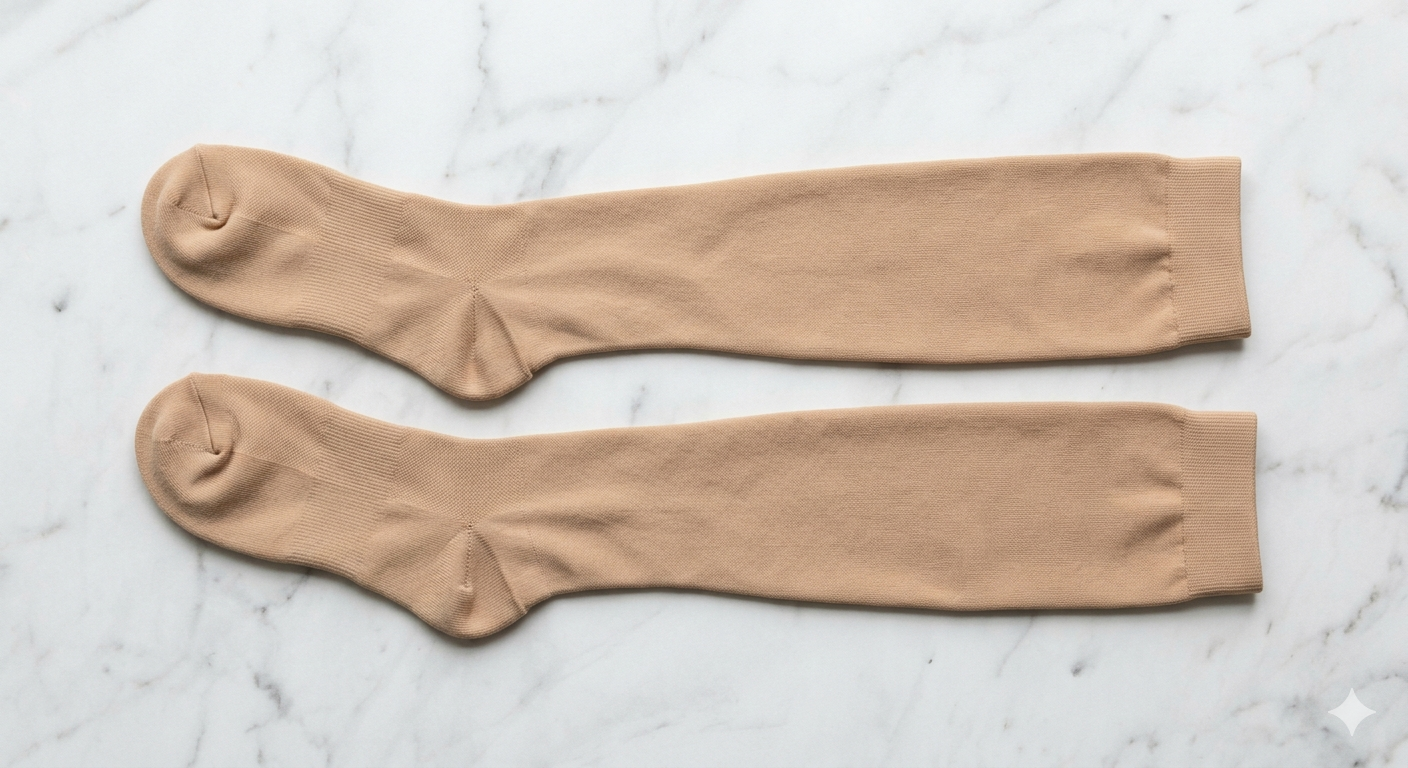
JOBST Relief Waist High Pantyhose 15-20 mmHg
Class 1 (15–20 mmHg) waist-high compression from a clinically recognised line — over the counter, but still worth measuring for.
Best for: Full-leg Class 1 compression from a medical brand
Pros
- ✓ Stated 15–20 mmHg rating
- ✓ Full-leg coverage including the thigh
- ✓ Widely used, clinically recognised line
- ✓ No prescription required to purchase
Cons
- ✗ Class 1 only — not sufficient for advanced venous disease
- ✗ Opaque and warm in summer
Side by side
| What differs | Medical-grade | Regular / activewear |
|---|---|---|
| Pressure rating | Stated mmHg range, verified against a standard | Usually unstated, or a vague 'high compression' claim |
| Knit | Flat-knit or precision circular-knit | Standard circular-knit stretch fabric |
| Gradient | Graduated: strongest at the ankle, easing upward | Roughly even pressure, or strongest where the fabric is thickest |
| Sizing | By leg measurements (ankle, calf, thigh circumference) | By dress size (S/M/L) |
| Certification | RAL-GZ 387, CE marking, or equivalent | None |
| Lifespan | 3–6 months of daily wear before pressure drops | Until the fabric looks worn out |
| Price | Higher — you pay for tested, repeatable pressure | Lower to mid |
When Regular Compression Is the Right Answer
If your legs feel tired after a long day, you want muscle support in the gym, or you like a smoother line under clothes, regular compression activewear is comfortable, cheaper, and entirely reasonable. Nobody needs a certified medical garment to go running.
The moment there is persistent swelling, visible veins that ache, a diagnosis, or a clinician's recommendation, the calculation changes. At that point the stated mmHg, the knit, and the fit are the product — not the fabric feel.
Common questions
Are medical-grade compression leggings just stronger versions of regular ones?
No. The pressure number is only one part of it. Medical-grade garments are knitted to hold a verified, graduated pressure profile across a measured leg, and that profile is tested against a standard. A regular activewear legging may feel tight, but nothing guarantees how much pressure it applies or where.
Do I need a prescription to buy medical-grade compression leggings?
Not for 15–20 mmHg or most 20–30 mmHg garments sold online. Higher classes, and custom flat-knit garments made to your measurements, usually go through a fitter or medical supplier — and that is the point at which a prescription typically enters the picture.
How can I tell what class a legging really is?
Look for an explicit mmHg range on the product page or the garment label, ideally with a named standard such as RAL-GZ 387 or a CE mark. If a listing says 'compression' but never states a pressure range, treat it as shapewear or activewear, not as a compression garment.
Is regular compression activewear a waste of money?
Not at all — it just does a different job. For gym sessions, muscle support, and a smoother silhouette, activewear-grade compression is comfortable and perfectly adequate. It is the wrong tool for a diagnosed venous or lymphatic condition.
Can I wear medical-grade leggings all day?
Most people wear them from morning until evening and take them off at night, unless a clinician advises otherwise. If a garment leaves deep indentations, causes numbness, or hurts, it is the wrong size or the wrong class — not something to push through.
Where to go next
If you now know which category you belong in but not which class, how to choose the right compression level (mmHg) walks through it by symptom rather than by product.
And if you're shopping for long shifts on your feet, our picks in best compression leggings for nurses apply the same criteria to a specific, demanding use case.
This article is general information, not medical advice. If you have a diagnosed venous or lymphatic condition, choose your compression class with a clinician or a trained fitter.