Best Medical-Grade Compression Leggings for Nurses (2026)
Fact-checked against cited clinical sources, August 2026. Written and reviewed by the Compression & Shapewear editorial team. Informational only; not medical advice.
The short answer
For most nurses, 15–20 mmHg graduated compression is the right level for a 12-hour shift — enough to slow venous pooling and ankle swelling, low enough to wear from handover to handover without numbness or marking.
- — Best overall: Comrad 15–20 mmHg knee-highs — healthcare-designed, survives hospital laundry
- — Best full-leg: VIM & VIGR 15–20 mmHg footless tights — ankle-to-waist gradient
- — Best premium: SIGVARIS Soft Silhouette — opaque footless legging from a prescribed medical brand
- — Best budget: JOBST / SIGVARIS on Amazon — clinical compression accuracy, plain styling
Nurses spend more time on their feet than almost any other profession. A 12-hour shift on a hospital ward means 8–10 miles walked, hours of standing, and constant transitioning between sitting, standing and bending. The cumulative toll on legs, feet and lower back is significant — and the right compression leggings make a measurable difference.
This guide covers the best compression leggings for nurses in 2026 — focusing on what actually matters for clinical environments: comfort over 12-hour shifts, durability through hospital-grade laundry, and compression levels that support without restricting movement.
How We Compared
Every product below was assessed against the same five criteria, in the order that matters on a ward rather than in a catalogue:
- — Stated mmHg and gradient: is the compression graduated (firmest at the ankle) and does the manufacturer publish the range?
- — Shift endurance: does the garment hold its gradient for 12+ hours without rolling at the waistband or cutting behind the knee?
- — Scrub compatibility: opacity, seam bulk under thin scrub fabric, and whether the foot section bunches inside closed-toe clinical shoes.
- — Laundry survival: compression is elastane-dependent; anything that loses its gradient after 30 hot washes is not a nursing garment.
- — Cost per wear: a $70 pair that lasts a year beats a $25 pair replaced every eight weeks.
We prioritise brands that publish compression values and manufacture to medical tolerances (SIGVARIS, JOBST, Comrad) over lifestyle activewear that markets "compression" without a stated mmHg range. Where a claim comes from the manufacturer rather than independent testing, we say so.
What Nurses Need From Compression Leggings
- — 15–20 mmHg graduated compression — the clinically recommended range for prolonged standing
- — Moisture-wicking fabric — hospital environments run warm
- — Durable construction — compression must survive frequent washing
- — Dark colours — navy, black, charcoal — that suit scrubs and clinical uniforms
- — Secure waistband — no readjusting mid-shift
- — Full-length or 7/8 length for complete leg coverage
Our Top Picks for Nurses
Comrad Compression Socks — Best Overall for Nurses
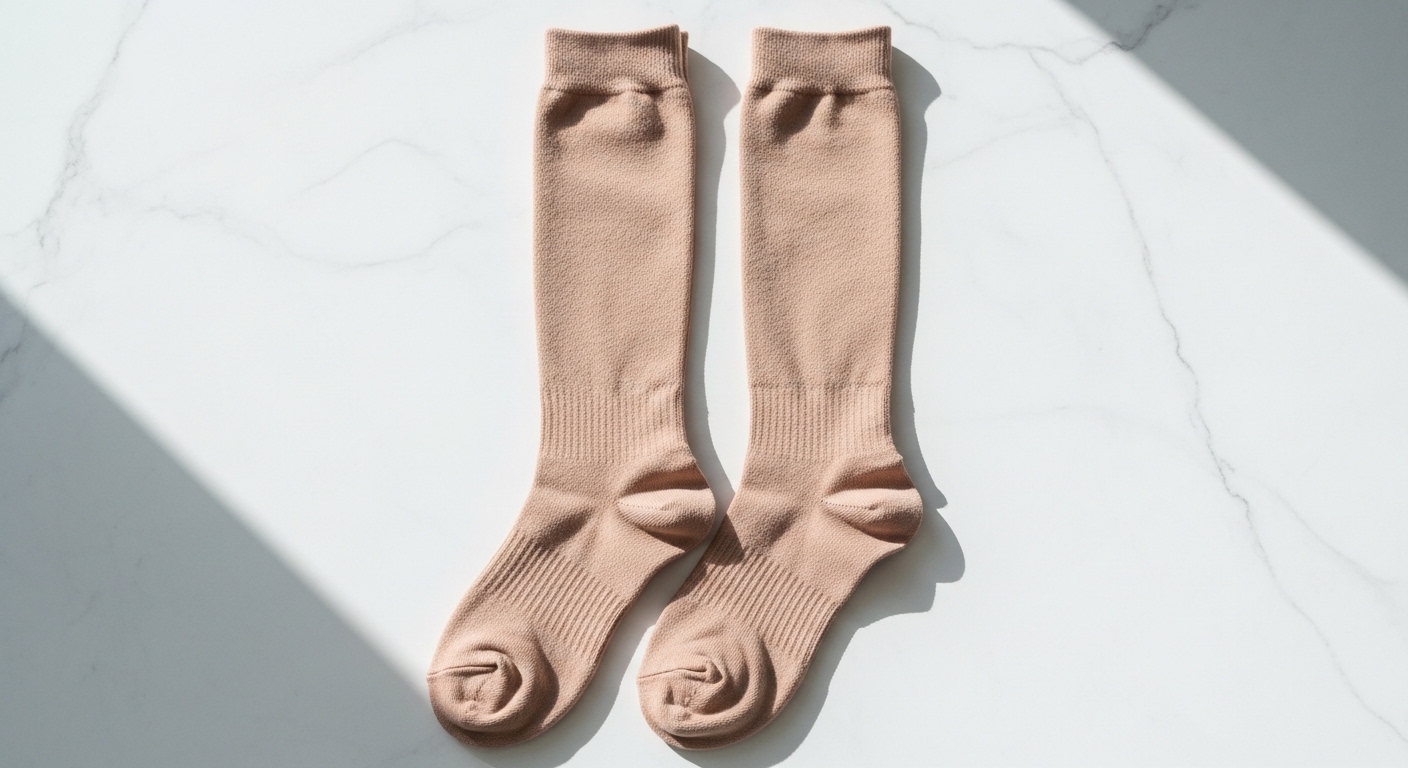
Comrad Compression Socks
Best Overall — designed with healthcare workers in mind. Graduated compression at 15–20 mmHg calibrated for all-day standing.
Best for: All-day calf and ankle support on 12h shifts
Pros
- ✓ 15–20 mmHg graduated compression
- ✓ Merino-blend temperature regulation
- ✓ Rated for 100+ washes
- ✓ Designed for healthcare workers
Cons
- ✗ Knee-high only — no full-leg coverage
- ✗ Limited colour options
Comrad was designed with healthcare workers in mind. Their graduated compression at 15–20 mmHg is precisely calibrated for all-day standing, the merino-blend fabric manages temperature effectively in clinical settings, and the construction holds up to frequent washing without losing compression. The knee-high style pairs with any clinical legging — many nurses wear Comrad socks under compression leggings for layered lower-leg support.
- — Compression: 15–20 mmHg graduated
- — Fabric: merino-nylon blend — temperature regulating
- — Wash durability: excellent — rated for 100+ washes
- — Best for: nurses who prioritise calf and ankle support
VIM & VIGR Footless Compression Tights — Best for Full-Leg Coverage
VIM & VIGR Nylon Footless Compression Tights (15–20 mmHg)
Class 1 graduated compression in a footless nylon tight, covering ankle to waist. The footless cut lets you wear your own socks or knee-highs and keeps shoe fit unchanged.
Best for: Full leg compression, varicose veins
Pros
- ✓ 15–20 mmHg graduated compression
- ✓ Full-leg coverage from ankle to waist
- ✓ Footless: pairs with your own socks or hosiery
Cons
- ✗ Footless edge shows at the ankle with open shoes or skirts unless layered
- ✗ Size by ankle and calf measurement, not dress size
For nurses who want compression above the knee, a footless 15–20 mmHg tight covers the whole leg without changing how your work shoes fit. Wear your usual socks on top, and choose knee-highs instead if you only need calf and ankle support.
- — Compression: 15–20 mmHg graduated
- — Style: footless, ankle to waist
- — Care: follow the maker's wash instructions; air dry to protect the elastic
- — Best for: full-leg support on long shifts
SIGVARIS Soft Silhouette Leggings — Best Premium Option
SIGVARIS Soft Silhouette Leggings
Best Premium — opaque, footless compression leggings from a physician-prescribed medical brand, built to clinical tolerances rather than lifestyle aesthetics.
Best for: Medical-grade opaque legging for full clinical shifts
Pros
- ✓ Opaque footless leggings — wear under scrubs without sheerness
- ✓ 15–20 mmHg graduated compression, clinically calibrated
- ✓ SIGVARIS — one of the most prescribed compression brands worldwide
- ✓ Soft microfibre knit comfortable against bare skin
Cons
- ✗ Premium price point
- ✗ Footless — no foot compression, ankle-only graduates from the calf
- ✗ Limited colour range
SIGVARIS is a clinical compression brand first and a fashion brand second — and that shows in the Soft Silhouette Leggings. They are opaque, footless compression tights, which means nurses get full calf-to-thigh graduated pressure without a foot section that bunches inside closed-toe work shoes. The 15–20 mmHg gradient is calibrated to medical tolerances rather than lifestyle marketing, and the soft microfibre knit sits comfortably against bare skin through a long shift.
The trade-off is price: SIGVARIS sits at the premium end. For nurses who want a medical-grade brand's compression accuracy in a legging they can actually wear under scrubs — opaque enough to be modest, footless so it layers cleanly — the Soft Silhouette is the strongest premium pick.
- — Compression: 15–20 mmHg graduated
- — Fabric: opaque soft microfibre knit
- — Style: footless leggings (calf-to-thigh coverage, no foot)
- — Best for: nurses wanting medical-brand compression in a scrub-compatible legging
Stay informed
Research-based reviews, comparisons, and buying guides — delivered to your inbox.
Jobst / Sigvaris via Amazon — Best Budget Option
Jobst / Sigvaris via Amazon
Best Budget — medical-grade compression from two of the most widely prescribed clinical brands, available at accessible prices on Amazon.
Best for: Medical-grade compression at accessible price
Pros
- ✓ Medical-grade 15–30 mmHg options
- ✓ Physician-recommended brands
- ✓ Most affordable option
- ✓ Wide availability on Amazon
Cons
- ✗ Less stylish design
- ✗ Basic fabric technology
- ✗ Less comfortable for casual wear
For nurses who need medical-grade compression at accessible prices, Amazon carries Jobst and Sigvaris — two of the most established names in clinical compression wear. Both brands offer 15–20 mmHg and 20–30 mmHg options, are widely recommended by physicians, and are significantly more affordable than premium lifestyle brands. Less elegant, fully functional.
- — Compression: 15–30 mmHg (multiple grades available)
- — Brands: Jobst Activewear, Sigvaris Traverse
- — Best for: budget-conscious nurses needing medical-grade compression
Comparison at a Glance
| Brand | Compression | Coverage | Durability | Shift Comfort | Price |
|---|---|---|---|---|---|
| Comrad | 15–20 mmHg | Knee-high | Excellent | All-day | $$ |
| VIM & VIGR | 15–20 mmHg | Footless tight | Good | All-day | $$ |
| SIGVARIS Soft Silhouette | 15–20 mmHg | Footless legging | Very good | All-day | $$$ |
| Jobst/Sigvaris | 15–30 mmHg | Knee/full | Good | All-day | $ |
How to Choose the Right Compression Level
The compression level you need depends on your situation, not just your preference:
- — 15–20 mmHg — suitable for healthy adults with leg fatigue, mild swelling, or prevention. This is the right starting level for most nurses.
- — 20–30 mmHg — recommended for moderate varicose veins, significant swelling, or post-thrombotic syndrome. This level requires a physician recommendation for some individuals.
- — 30–40 mmHg — medical grade, typically prescribed. Not suitable for self-selection.
When in doubt, start at 15–20 mmHg. This range delivers meaningful benefits without the discomfort that comes with unnecessarily firm compression.
Medical-Grade vs. "Compression" Activewear
The word "compression" is unregulated in activewear. A gym legging described as compressive is usually just a firm knit with no measured gradient — pressure is roughly even from ankle to hip, which is the opposite of what venous return needs. Medical-grade garments state a range in mmHg and are strongest at the ankle, decreasing up the leg, so each step pushes blood upward rather than letting it pool.
For nursing, the practical test is simple: if the packaging does not print an mmHg range, treat it as a shaping legging, not a circulatory one. Graduated 15–20 mmHg is the occupational standard for prolonged standing; 20–30 mmHg is a clinical grade better discussed with a physician if you already have visible varicosities or persistent end-of-shift oedema.
Fit and Sizing Under Scrubs
- — Measure in the morning, before swelling starts. Ankle circumference at the narrowest point and calf at the widest point matter more than dress size.
- — Between sizes, size down for compression, up for comfort. A garment that slides down mid-shift has already stopped working.
- — Check the waistband against your scrub trousers. Two elasticated bands at the same height is the most common cause of mid-shift readjusting.
- — Footless styles layer better with closed-toe clinical shoes; foot sections bunch under the arch after a few hours.
- — Watch for numbness, tingling or deep marks at the ankle — that is a sizing problem, not a break-in period.
Nurses who mainly get calf and ankle swelling often do better in knee-highs than full-leg tights; the pressure is concentrated where the pooling happens and the garment is far easier to change halfway through a night shift. Our medical-grade compression socks guide for nurses covers those picks in detail.
Care Tips to Extend Compression Life
- — Machine wash cold, gentle cycle — or hand wash for maximum longevity
- — Never tumble dry — heat destroys elastane fibres and reduces compression
- — Air dry flat or hanging — avoid direct sunlight
- — Rotate between two pairs — compression fabric benefits from recovery time between wears
- — Replace compression wear every 4–6 months of daily wear — compression degrades with use
For profession-specific wellness guides including recovery rituals after long shifts, visit Shape & Support.
Frequently Asked Questions
Do I need a prescription for compression leggings?
Not for 15–20 mmHg compression, which is widely available without prescription and suitable for most nurses. 20–30 mmHg and above may require a physician recommendation depending on your health history. If you have circulatory conditions, consult your physician first.
Can I wear compression tights under scrubs?
Yes — compression tights are designed to be worn under clothing. Choose seamless or thin styles for the most comfortable fit under scrubs. Dark colours (navy, black) are least visible if scrub fabric is thin.
How long before I notice a difference?
Most nurses notice reduced leg heaviness and less swelling within the first 1–2 weeks of consistent wear. For best results, put compression on at the start of your shift rather than after several hours — compression is most effective when worn from the beginning.
Do compression leggings help with varicose veins?
Compression wear doesn't remove existing varicose veins, but it reliably reduces discomfort and slows progression. 15–20 mmHg helps with mild varicose veins; for pronounced cases, discuss 20–30 mmHg options with your physician.
Looking for compression wear specifically for flight attendants?
Best Compression for Flight Attendants