Best Compression Socks 2026: Comrad vs. JOBST vs. Sigvaris
Fact-checked against cited clinical sources, July 2026. Written and reviewed by the Compression & Shapewear editorial team. Informational only; not medical advice.
Three brands dominate the 15–20 mmHg compression sock category for women who wear them seriously — not as gym accessories, but because their job requires 8–12 hours on their feet. Comrad, JOBST, and Sigvaris each solve the problem differently. This is a direct comparison.
What You're Actually Comparing
"Compression sock" covers a wide range, and most comparisons conflate light support with actual medical-grade compression. For crew, nurses, and teachers who stand all day, the relevant range is 15–20 mmHg (Class 1) for everyday prevention, up to 20–30 mmHg (Class 2) for moderate edema or varicose veins. (Source: PMC4081237)
These three brands all operate in that window. What differs is construction, fit philosophy, and what kind of day they're built for.
Side-by-Side Comparison
| Feature | Comrad Knee High | JOBST UltraSheer Knee-High | Sigvaris Style Sheer 780 |
|---|---|---|---|
| Compression | 15–20 mmHg | 15–20 mmHg | 20–30 mmHg |
| Fabric | Cotton blend (opaque) | ~15 denier (sheer) | Sheer, structured |
| Best use case | Everyday, casual crew | Uniform compliance, invisible | Medical support, varicose veins |
| Washability | Machine wash | Hand wash recommended | Hand wash |
| Price tier | Mid | Mid–High | High |
Comrad Premium Cotton Knee High Socks (15–20 mmHg)
Comrad built their reputation in the DTC compression sock category — the brand that made compression feel approachable rather than clinical. The premium cotton knee-high is their core product: a soft, breathable cotton-blend knit that holds its shape through a full shift, graduated from ankle to calf, available in neutral colours that work under most work trousers or skirts.
They're not the most invisible sock on this list, but they're the most comfortable to wear all day, and the cotton content keeps the foot cooler than a full-synthetic knit. Crew who want something that survives regular washing without losing compression integrity tend to land here. The ankle compression is consistent through repeated use, which matters if you're wearing them four or five days a week.
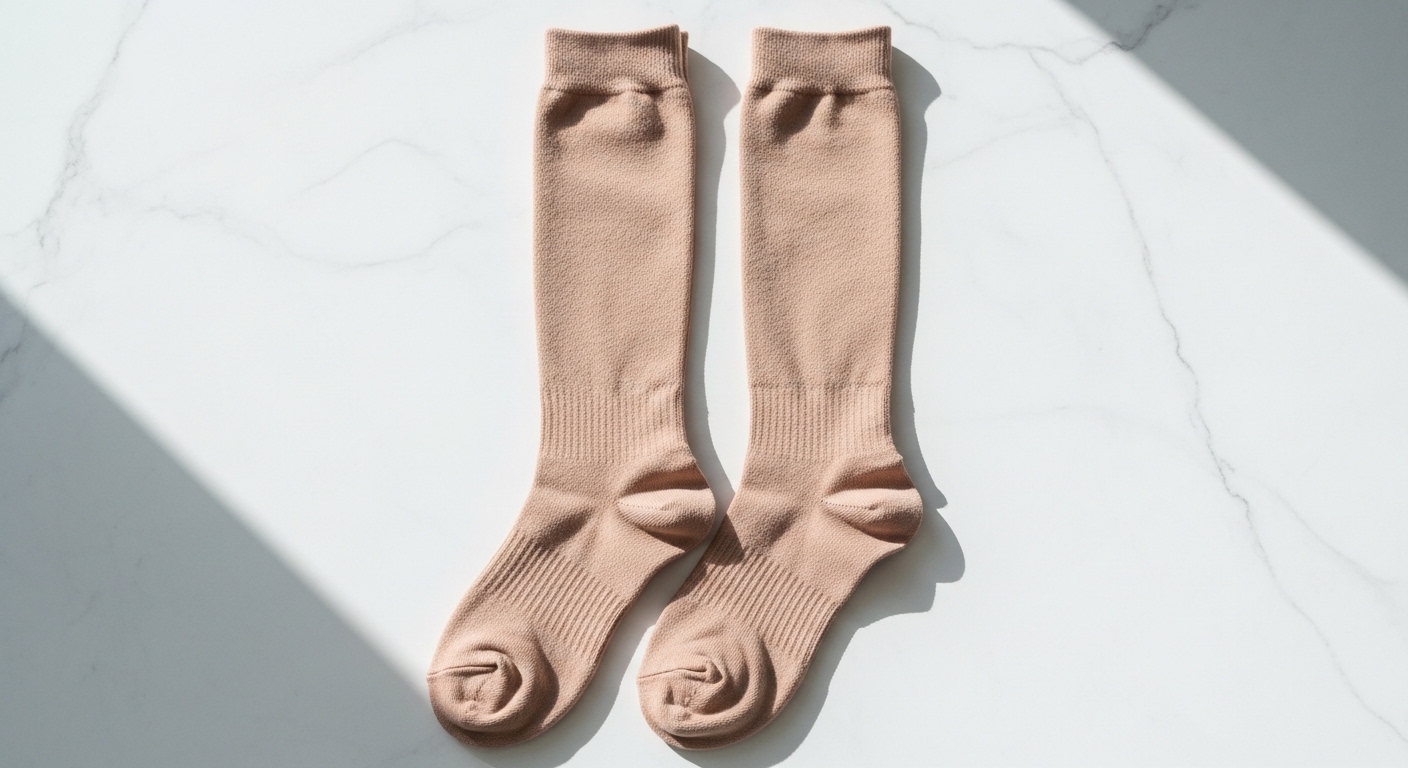
Comrad Premium Cotton Knee High Socks 15-20 mmHg
Soft, breathable cotton-blend knee-high with graduated 15–20 mmHg compression. Comfortable enough for a full shift and holds ankle compression through repeated washing.
Best for: Everyday wear, casual crew, uniform trousers
Pros
- ✓ Soft, breathable cotton blend
- ✓ Machine washable
- ✓ Neutral colours for workwear
- ✓ Consistent ankle compression
Cons
- ✗ Opaque — less invisible under skirts
- ✗ Knee-high only
JOBST UltraSheer Knee-High (15–20 mmHg)
JOBST is a clinical brand that has been making medical compression since before most DTC brands existed. The UltraSheer is their uniform-facing product: roughly 15 denier, sheer enough to look like regular tights from a distance, with firm ankle compression that you can feel clearly but which doesn't restrict movement.
For flight attendants with strict uniform policies, this is the invisible-under-skirt option. The 15–20 mmHg range is sufficient for DVT prevention on long-haul flights and swelling management during a shift. The knee-high length keeps the calf pump active without the complexity of full-length tights. They run slightly small; size up if you're between sizes.
JOBST UltraSheer Knee-High 15-20 mmHg
Sheer 15-denier medical compression knee-high with firm graduated ankle compression. The invisible-under-skirt option for uniformed cabin crew.
Best for: Flight attendants in skirt uniforms, long-haul DVT prevention
Pros
- ✓ Sheer and virtually invisible
- ✓ Clinical brand heritage
- ✓ Firm ankle compression
- ✓ Ideal under skirt uniforms
Cons
- ✗ Hand wash recommended
- ✗ Runs small — size up if between sizes
Sigvaris Style Sheer 780 Knee-High (20–30 mmHg)
Sigvaris is the most medically oriented brand in this comparison. The Style Sheer 780 sits at 20–30 mmHg (Class 2), which puts it in the range for moderate edema, chronic venous insufficiency, and varicose vein management — not just preventive swelling control. If you've been told by a doctor you need firm compression, this is the appropriate product.
It's also sheer and reasonably uniform-compatible despite the higher compression class, which is rare in the 20–30 mmHg category. The trade-off is donning: higher compression means more effort to put on. A donning aid is genuinely useful at this level. If 15–20 mmHg works for you, don't jump to Class 2 without a clinical reason.
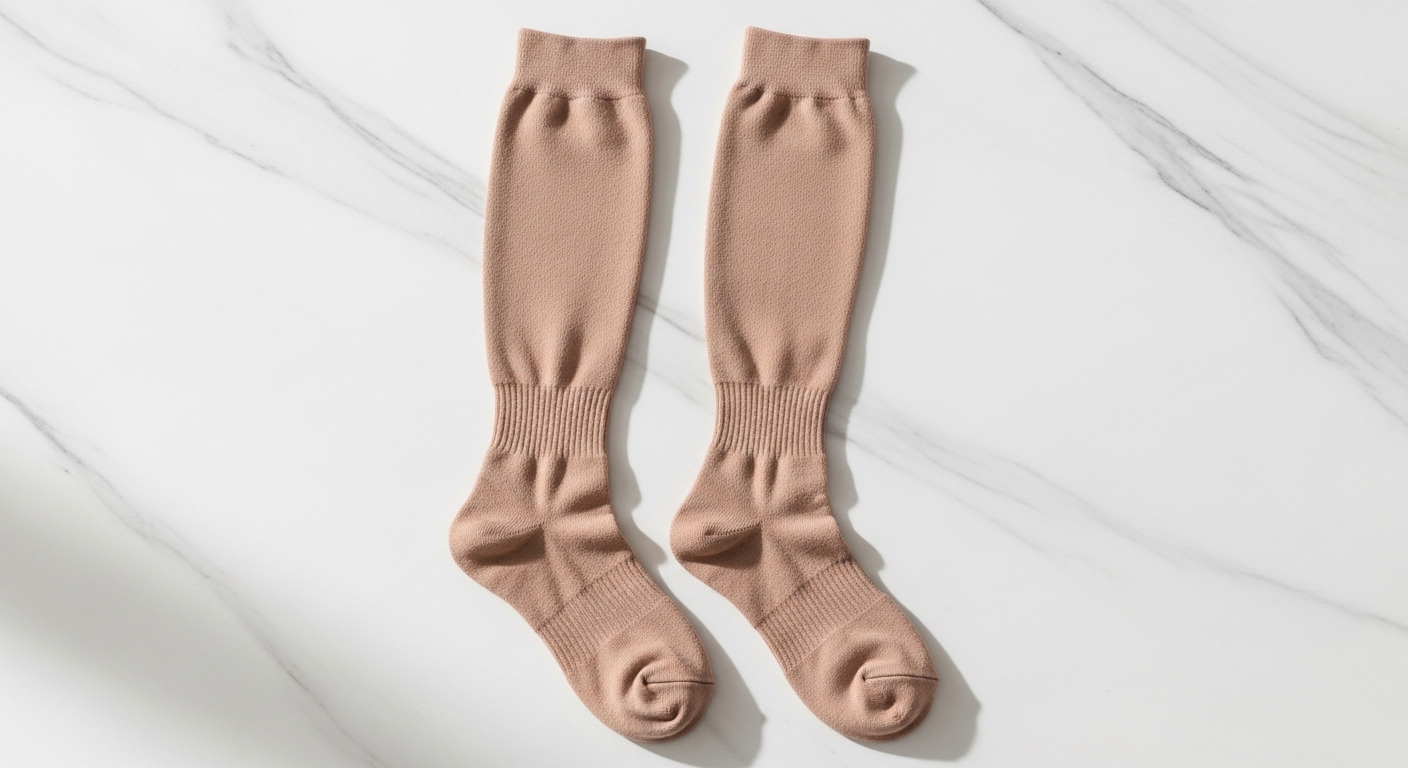
Sigvaris Style Sheer 780 Knee-High 20-30 mmHg
Class 2 (20–30 mmHg) sheer knee-high for moderate edema, CVI and varicose vein management. Rare combination of medical-grade compression and uniform-compatible sheerness.
Best for: Clinical use, moderate edema, varicose veins, CVI
Pros
- ✓ True 20–30 mmHg (Class 2) compression
- ✓ Sheer despite higher class
- ✓ Trusted medical brand
Cons
- ✗ Harder to don — donning aid helpful
- ✗ Hand wash only
- ✗ Premium price
Frequently Asked Questions
Which compression sock is best for flight attendants?
For uniform compliance, JOBST UltraSheer is the best fit — it's sheer enough to be invisible under a skirt and provides 15–20 mmHg, the recommended range for cabin crew (PMC4081237). Comrad is the better choice if you're wearing uniform trousers and want soft, breathable cotton over sheerness.
Is 20–30 mmHg safe to wear every day?
Class 2 compression (20–30 mmHg) is safe for daily use, but it's typically recommended for specific clinical conditions like moderate edema or varicose veins, not just preventive use. If you're healthy and standing all day, 15–20 mmHg is sufficient — and easier to wear. Talk to your doctor before moving to Class 2 regularly.
How do I know if my compression socks are still working?
Compression socks lose elasticity over time. A good rule of thumb is 4–6 months of regular use (defined as 3+ days per week). If you can bunch the fabric significantly without resistance at the ankle, they've lost most of their compression. JOBST and Sigvaris typically hold their compression longer than lower-cost alternatives.
Can I machine wash compression socks?
Comrad is machine-washable (cold, gentle cycle). JOBST UltraSheer and Sigvaris recommend hand wash to preserve the graduated compression structure. Tumble drying on heat damages the elastic in all compression socks — air dry flat or hanging.
Which One
If you're buying for the first time and you're in a uniform job: JOBST UltraSheer.
If you're buying for soft, breathable daily wear without uniform restrictions: Comrad.
If you have a clinical reason for higher compression and your doctor agrees: Sigvaris Style Sheer 780.
The full guide to choosing your compression level by mmHg class is at How to Choose the Right Compression Level.